
Available Dates & Venues
Classroom Schedule
| Date | Venue | Format | Fees | Registration |
|---|---|---|---|---|
| November 3, 2026 - November 5, 2026 | Saudi Arabia - Dammam | Classroom | N/A |
Introduction
In industrial plants, manufacturing, utilities and energy, professionals regularly work with equipment function, specifications, diagrams and operating records. Clear methods, accurate information and sound judgement help teams manage complexity, improve communication and avoid preventable errors.
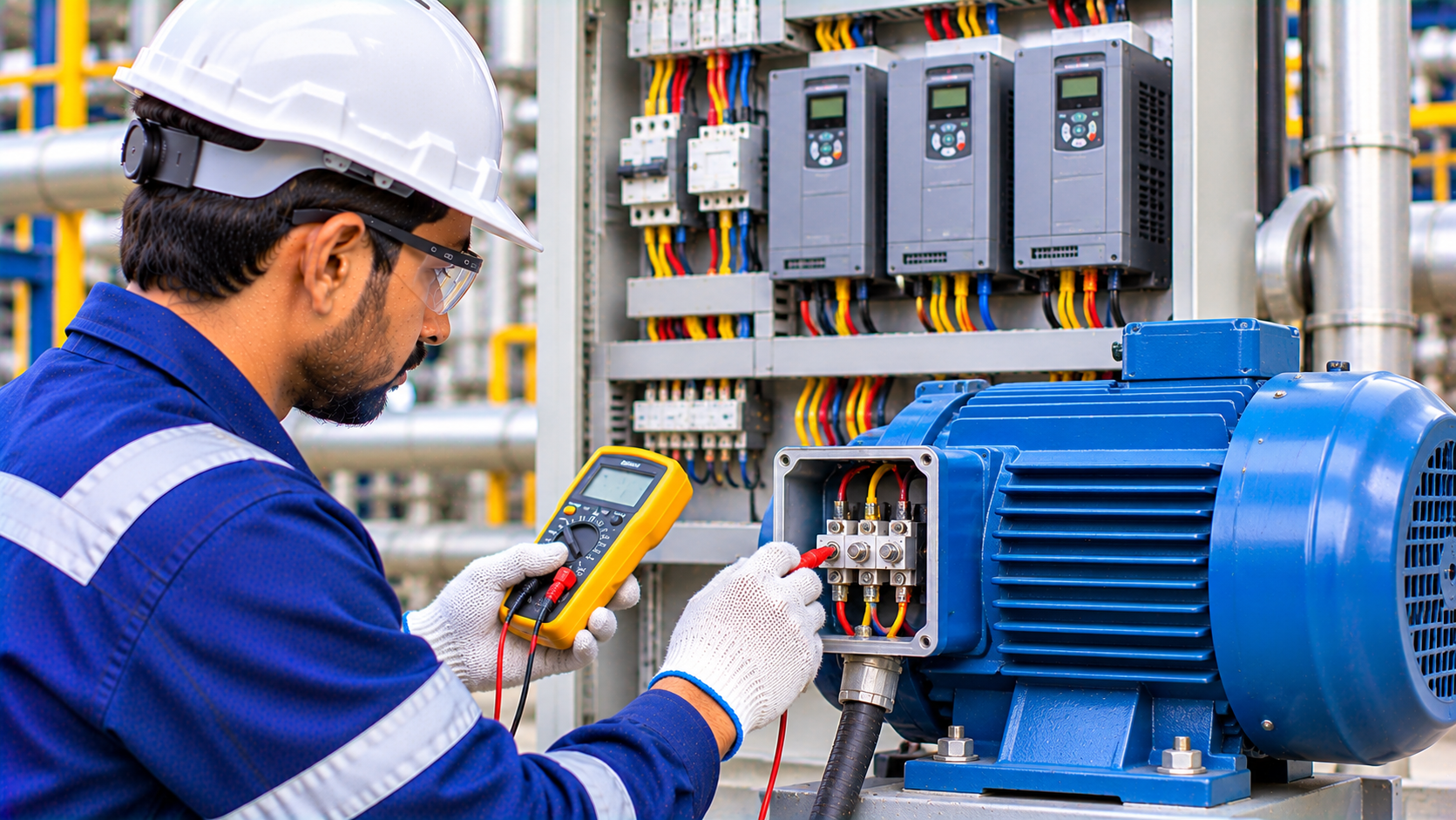
Motors, Variable Frequency Drives & Motor Protection develops practical capability in industrial engineering and technical systems performance, connecting core concepts to equipment function, specifications, diagrams and operating records. Participants examine maintenance diagnosis, control concepts and technical decision-making through structured examples and guided workplace scenarios. The proposed programme is designed to produce a structured troubleshooting and action plan and help professionals make sound, explainable decisions.
This programme is designed for engineers, technicians and operations supervisors. Through structured exercises, guided discussion and a course-specific case, participants connect the subject to workplace needs and identify practical steps for further development.
Objectives
The course aims to build the knowledge, applied judgement and clear communication needed to approach motors, variable frequency drives & motor protection with confidence.
By the end of the course, participants should be able to:
- Explain the purpose, scope and essential terminology of motors, variable frequency drives & motor protection.
- Identify key inputs and professional responsibilities relevant to motor types and operating characteristics.
- Apply suitable tools or references to vfd concepts, control and protective functions.
- Evaluate a supplied workplace case involving performance issues and maintenance data.
- Review the evidence and decisions associated with troubleshooting records and engineering safeguards.
- Document the reasoning behind an appropriate workplace or study recommendation.
- Prepare a focused action or revision plan using feedback from the final workshop.
Training Methodology
Training combines structured explanations with practical opportunities to apply, discuss and review learning.
The course includes:
- Instructor-guided explanations of motors, variable frequency drives & motor protection: purpose, scope and workplace relevance and the relevant professional context.
- Worked examples and guided exercises addressing motor types and operating characteristics.
- Technical diagrams and equipment-record interpretation.
- Guided diagnostic scenarios using safe example data.
- Fault analysis and maintenance case review.
- Case review, group feedback and practical application of troubleshooting records and engineering safeguards.
- Short knowledge checks and a final action or revision plan to support further learning.
Organisational Impact
Organisations can use this programme to strengthen technical troubleshooting consistency and equipment readiness and develop the capability of relevant teams.
The training is designed to help organisations:
- Create a shared understanding of Motors, Variable Frequency Drives & Motor Protection: purpose, scope and workplace relevance among relevant team members.
- Improve the consistency of technical troubleshooting consistency and equipment readiness.
- Encourage well-supported decisions about vfd concepts, control and protective functions.
- Strengthen communication, record keeping and review across responsible functions.
- Identify capability gaps linked to troubleshooting records and engineering safeguards for targeted follow-up.
- Use a practical a structured troubleshooting and action plan as a starting point for coaching or operational improvement.
Corporate delivery can be discussed around the team’s roles, operational context and agreed learning priorities.
Personal Impact
Participants will gain:
- A clearer understanding of the principal concepts behind motors, variable frequency drives & motor protection.
- Improved ability to discuss motor types and operating characteristics with colleagues.
- Guided practice in vfd concepts, control and protective functions.
- Greater confidence in examining data, assumptions, documents or workplace evidence.
- Experience evaluating case decisions linked to troubleshooting records and engineering safeguards.
- Feedback that supports further progress in systems understanding and structured technical diagnosis.
- A personal workplace application or revision plan to continue learning.
Who Should Attend?
This course is intended for:
- Plant maintenance engineers
- Electrical, mechanical and control engineers
- Industrial technicians and team leaders
- Operations engineers
- Technical supervisors and asset managers
- Process improvement and reliability personnel
Recommended preparation: Basic inspection or fabrication knowledge is recommended; any formal NDT qualification requirements are verified separately.
Certificates
Upon successful completion of the programme and its published completion requirements, participants may receive a GenTechSkills Certificate of Completion.
The certificate documents course completion and is not presented as a third-party professional certification unless an approved arrangement is separately stated.
Course materials, digital platform access and any optional assessment arrangements should be confirmed in the quotation.
Course Schedule and Corporate Training
Contact GenTechSkills to discuss available dates, delivery options, teaching language and course fees.
For a corporate proposal, share your team size, experience level, preferred schedule and learning priorities.
Request Schedule & Fees | Request Corporate Training
Related Courses
- Industrial Electrical Protection & Relay Fundamentals.
- Rotating Equipment: Pumps, Compressors & Turbines.
- Electrical Maintenance & Troubleshooting.
- PLC Programming & Troubleshooting.
- Instrumentation & Process Control Fundamentals.
- SCADA Systems & Industrial Automation.
Take the Next Step
Develop your motors, variable frequency drives & motor protection capability through a focused learning plan or explore a relevant corporate programme for your team.
Enquire About Motors, Variable Frequency Drives & Motor Protection Training
Curriculum
- 3 Sections
- 21 Lessons
- 3 Days
- Day 1: Motors, Variable Frequency Drives & Motor Protection fundamentals7 Items
- 1.1Motors, Variable Frequency Drives & Motor Protection: purpose, scope and workplace relevance.
- 1.2Identify the current work context, professional roles, expected outputs and applicable constraints.
- 1.3Review relevant evidence, trade-offs and limitations associated with motors, variable frequency drives & motor protection: purpose, scope and workplace relevance.
- 1.4Motor types and operating characteristics.
- 1.5Work through a supplied scenario that requires decisions about motor types and operating characteristics.
- 1.6Review relevant evidence, trade-offs and limitations associated with motor types and operating characteristics
- 1.7Practical workshop: Complete linked exercises: identify a realistic motors, variable frequency drives & motor protection requirement, role and source of evidence; analyse a supplied scenario and document assumptions, limits and critical details.
- Day 2: VFD concepts, control and protective functions7 Items
- 2.1VFD concepts, control and protective functions.
- 2.2Work through a supplied scenario that requires decisions about vfd concepts, control and protective functions.
- 2.3Review relevant evidence, trade-offs and limitations associated with vfd concepts, control and protective functions.
- 2.4Performance issues and maintenance data.
- 2.5Work through a supplied scenario that requires decisions about performance issues and maintenance data.
- 2.6Review relevant evidence, trade-offs and limitations associated with performance issues and maintenance data.
- 2.7Practical workshop: Complete linked exercises: compare methods or evidence with an approved guidance example or safe case; interpret results, note uncertainties and explain defensible decisions.
- Day 3: Troubleshooting records and engineering safeguards7 Items
- 3.1Troubleshooting records and engineering safeguards.
- 3.2Examine the quality and completeness of evidence or records used for troubleshooting records and engineering safeguards.
- 3.3Review relevant evidence, trade-offs and limitations associated with troubleshooting records and engineering safeguards.
- 3.4Motors, Variable Frequency Drives & Motor Protection: case assessment, review and next steps.
- 3.5Integrate course evidence, review a realistic motors, variable frequency drives & motor protection: case assessment, review and next steps and explain the recommendations.
- 3.6Review relevant evidence, trade-offs and limitations associated with motors, variable frequency drives & motor protection: case assessment, review and next steps.
- 3.7Practical workshop: Complete linked exercises: develop a concise improvement, study or quality assurance recommendation; present a case response and convert feedback into an action plan.